What Is ITC? A Plain-English Introduction to Instrumental Trans-Communication
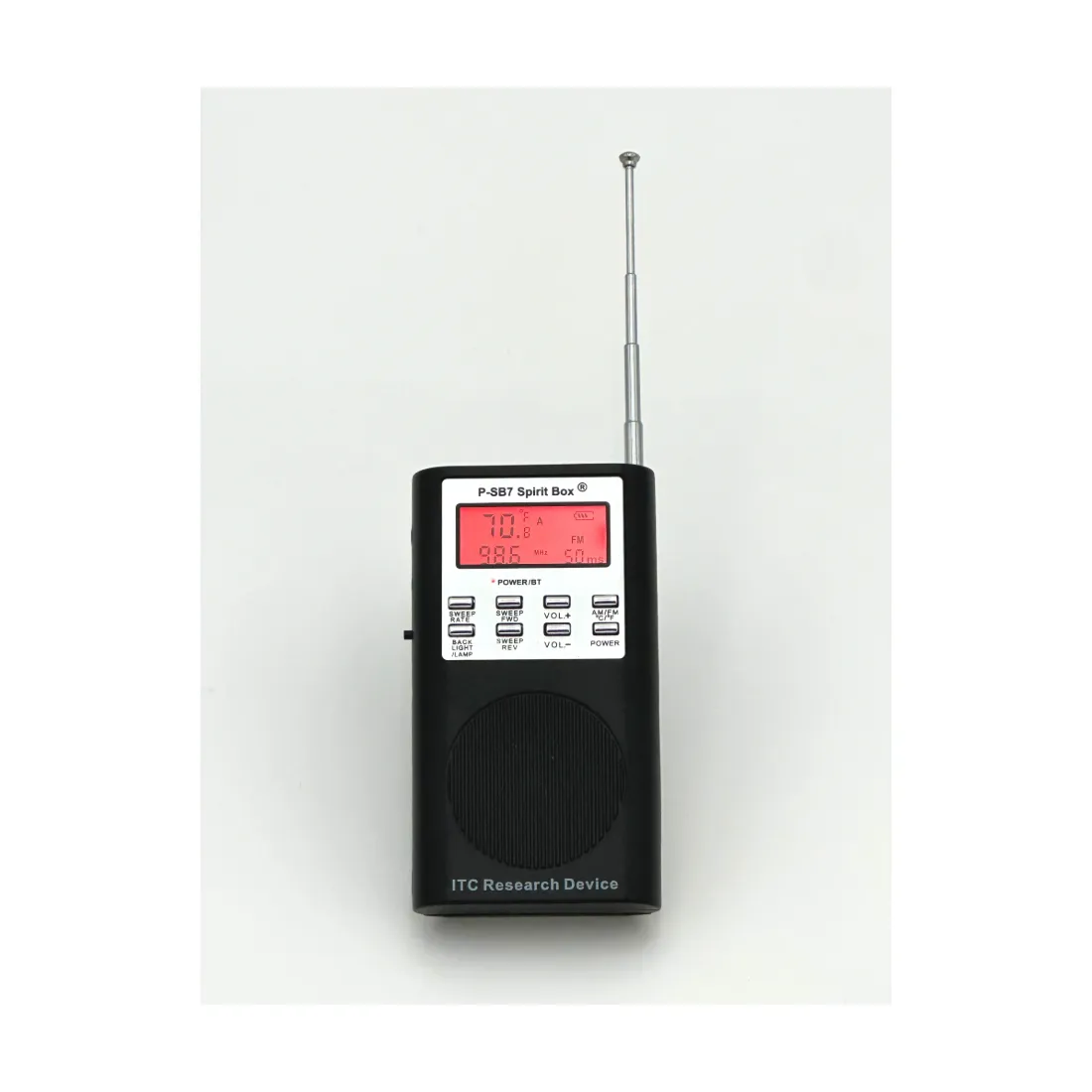
ITC stands for Instrumental Trans-Communication. In plain terms, it is the practice of using electronic instruments, a radio-based spirit box, a voice recorder, an EMF meter, to capture and study responses during a paranormal investigation. It is a research framework, not a claim of proof, and understanding that difference is the first thing I teach anyone who picks up one of my devices.
Where ITC comes from
The field is older than most people think. Recording unexplained voices, what researchers call EVP, or Electronic Voice Phenomena, goes back to the 1930s and took off after 1959 when Friedrich Jurgenson found voices on his tape recordings. The Latvian psychologist Konstantin Raudive turned it into a serious study in the 1960s. The term Instrumental Trans-Communication itself was coined by Ernst Senkowski in the 1970s, as researchers moved from tape recorders to purpose-built electronics. Later projects like Spiricom in the early 1980s tried to build two-way devices.
The direct ancestor of the modern spirit box was Frank Sumption's homemade box around 2002, a modified AM radio that scanned the band continuously. My P-SB7 was the first production-built device in that lineage, designed specifically for researchers rather than hobbyists soldering their own units.
Watch: how communication is framed
How ITC works today
A frequency-sweep spirit box scans across the AM or FM band very quickly, never resting on a station, with a burst of white noise between each step. Fragments of audio pass by, and a response can form in that changing sound. You listen in real time and record everything for review afterward. Alongside the spirit box, investigators use an EMF and temperature meter like the Mel Meter, a proximity detector like the REM-POD, and audio tools that clean up and slow down what you captured.
The honest part
I am an engineer, so I am careful with language. These instruments do not prove ghosts, and I never say they do. What they do is give you repeatable ways to capture, record, and review responses so you can judge the evidence for yourself. Skeptics point out that the human brain finds words in random noise, an effect called pareidolia, and that a spirit box is still a radio picking up real stations. Both are true, and both are why method matters. Shield out live radio with a Faraday pouch, run the same setup with no one present as a control, and log what you get. Good method does not weaken a compelling response. It makes it stronger.
The main tools, and what each one is for
ITC is not one device, it is a small kit that answers different questions. The spirit box is your voice channel, the part that produces the audio a response can form in. An EMF and temperature meter like the Mel Meter surveys the environment and flags changes in the field or the temperature. A proximity detector like the REM-POD radiates its own field and reacts when something enters it. Audio tools like the ANC-Mini and the APF-D Processor clean up, amplify, and slow down what you captured so you can study it. You do not need all of it to begin. Most people start with a spirit box and a speaker and add the rest as their questions get more specific.
New to this? Start with a spirit box, then read our guide to running your first session.


